

Is That Sponsorship Worth It? How to Pick Local Sponsorships That Send Customers, Not Just Thank-Yous
Whether it’s a youth league needing a banner sponsor, a school printing fundraiser programs, or a charity 5K wanting your logo, these requests reach most local businesses monthly. Most owners answer them by gut feel, which can tell you whether a cause deserves support but says very little about what a sponsorship will return.
This post gives you a simple way to score each request and track what it brings in. With those two habits in place, local sponsorship marketing can work as a dependable part of your local marketing and show up in your reports like any other channel.
Why Local Sponsorship Marketing Deserves a Real Decision
Many small business owners see the same kinds of requests year after year, and each one tests how much the business supports its local community. Before scoring any of them, it helps to know what sponsoring locally can realistically do for a business.
What Is Local Sponsorship Marketing?
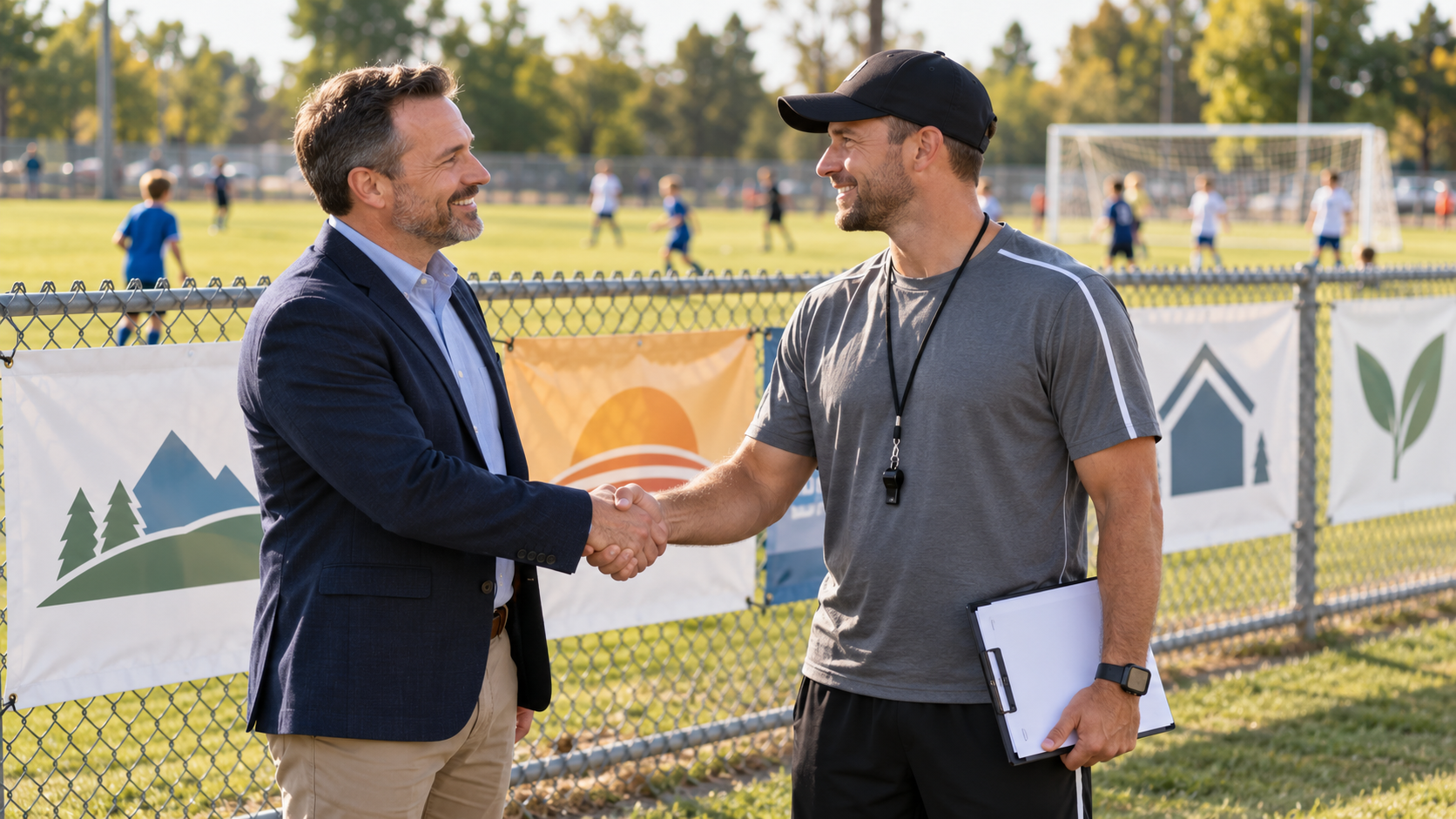
Local sponsorship marketing is backing a team, cause, or event in your community in exchange for visibility with its audience. The money, products, or services you provide give you brand exposure with an audience the organizer has already built. Unlike traditional advertising, sponsorship places your brand within an event or cause people already value, helping build brand awareness and a local presence among community members.
Do Customers Still Value Local Businesses That Give Back?
Customers do still value local businesses that give back, and recent survey data shows how strongly they feel about it. In the American Express Shop Small study, 75% of consumers called local shops essential to their community, and 73% said local businesses support it (American Express, 2025).
Those figures describe goodwill, so they don’t prove that any one sponsorship will send you calls. They explain why a well-chosen sponsorship earns a warm welcome from community members, giving you something to build on once tracking is in place.
Which Local Events and Local Sports Teams Can You Sponsor?
Most requests fall into a few familiar types, each offering a different kind of exposure:
A local sports team, where your logo can appear on uniforms or banners.
Charity events, including raffles where an in-kind donation puts your products or services in front of attendees.
Community festivals and other community events that bring a wide mix of community members together.
School fundraisers and community initiatives, such as program ads or park cleanups.
Local clubs and civic groups with newsletters or websites that can mention your support.
Industry events, where sponsoring can help you gain exposure and show leadership in your field.
Any of these can work, but success depends on who attends and how you follow up afterward.
How to Score Local Sponsorships Before You Say Yes
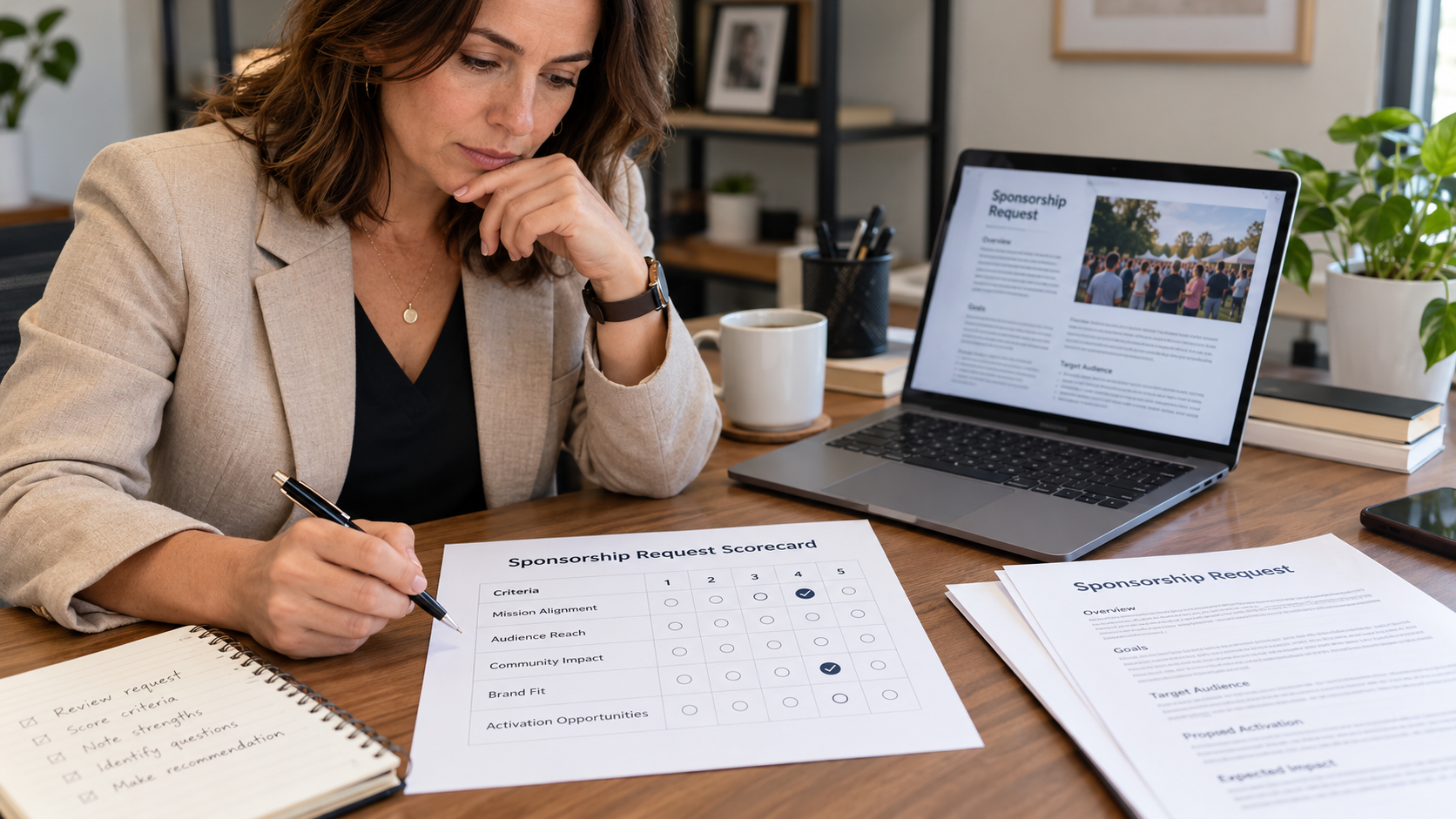
Five short phases take you from a request to a clear yes or no, and each one takes only a few minutes. The first four phases each ask one question and earn a score from 1 to 5, and the fifth adds the scores together and sets your budget.
Phase 1. How Well Does the Audience Match Your Customers?
Start with your target market, then ask the organizer to share audience data such as age ranges and neighborhoods. That information shows whether the crowd looks like your ideal customers. For example, a pest control company gains more from a neighborhood festival full of homeowners than from an industry mixer attended by other businesses.
The organization’s reputation matters as well, so check whether its mission fits your company’s values, since your name will sit beside theirs for as long as the sponsorship runs. Score it a 5 when the audience closely matches your customers and the cause fits your values, and a 1 when they barely overlap.
Phase 2. What Does Logo Placement Really Do for Brand Visibility?
Logo placement can mean almost anything, from a large sign at the entrance to a tiny mark squeezed onto the back of a shirt. Ask for specifics before you pay, including a link to your website from the organizer’s site and a tag whenever they post about the event.
It also helps to know which of the organizer’s digital platforms will feature you and whether the package includes any promotional opportunities, such as pre-event emails. A mention on the organizer’s website also counts as a third-party mention, and as we’ve covered before, brand mentions help AI visibility when assistants decide which businesses to recommend. Score it a 5 when you get a website link, a social tag, and clear signage, and a 1 when you get only a name on a crowded banner.
Phase 3. How Do You Compare Price and Reach, Including In-Kind Sponsorship?
Start by dividing the price by the number of people you can realistically reach, then compare that cost per person with your other marketing efforts. An in-kind sponsorship works the same way once you value donated services or raffle prizes at what it costs you to provide them. That puts a financial sponsorship and a donation on the same scale.
Many event organizers also sell sponsorship packages at several prices, so ask what each tier includes before choosing one. Score it a 5 when the cost per person beats your other local marketing, and a 1 when it costs far more for the same reach.
Phase 4. What Follow-Up Turns Brand Awareness Into Calls?
Your follow-up determines whether brand awareness turns into calls, so plan it before you say yes. Promoting the partnership on your own social media and email list keeps your name in front of your target audience long after the event ends.
If you can staff a booth and hand out free samples, interactive experiences make your brand easier to remember. Some organizers also offer speaking opportunities, which can introduce you to potential customers in a more personal way. Budget some time and money for these steps, since the fee covers only part of the cost of making the exposure pay off.
Score it a 5 when you have a concrete plan and time to carry it out, and a 1 when the effort ends once the check clears.
Phase 5. How Do You Turn the Answers Into a Score and a Budget?
Add the four scores to get a total out of 20, and set a minimum total before requests arrive, such as 14. A simple log of previous sponsorships and their results makes the next decision easier, because new requests can be compared with ones that already worked.
Alongside the scorecard, set a sponsorship budget and list the local causes and areas you want to support so every request meets the same standards (Sparklight Business, n.d.). A clear limit also keeps part of your marketing budget free, so you can say yes to a better fit and avoid missed opportunities.
How to Make Sponsorships Show Up in Your Lead Reports
A sponsorship you can’t trace leaves you guessing about its value, while a little setup before the event puts the results in the same reports as your other marketing. Three moves build that setup, from the page itself to the numbers you check afterward.
Build a Dedicated Page for Each Sponsorship
Create one page on your site for each sponsorship, then use a special link to that page everywhere the organizer promotes you. Adding Google Analytics campaign tags to that link lets Analytics record the organizer as the source, so each sponsorship appears as its own line in your reports (Google, n.d.).
People form an opinion of a page quickly, and what visitors decide in seconds shapes whether they call or leave, so keep it short and easy to act on. These three items cover most of what the page needs:
A headline that names the event, so visitors know they’ve reached the right place.
A reason to act, such as an event-only discount or a free estimate.
A visible phone number and a short form.
Add at Least One More Tracking Method
Pair the page with at least one more method, since some people will call or stop by without ever opening your link.
Tracking phone number. Print it on sponsor materials like banners and programs to count the calls from that sponsorship.
Promo code. Make one just for the event audience to see redemptions tied to the sponsorship.
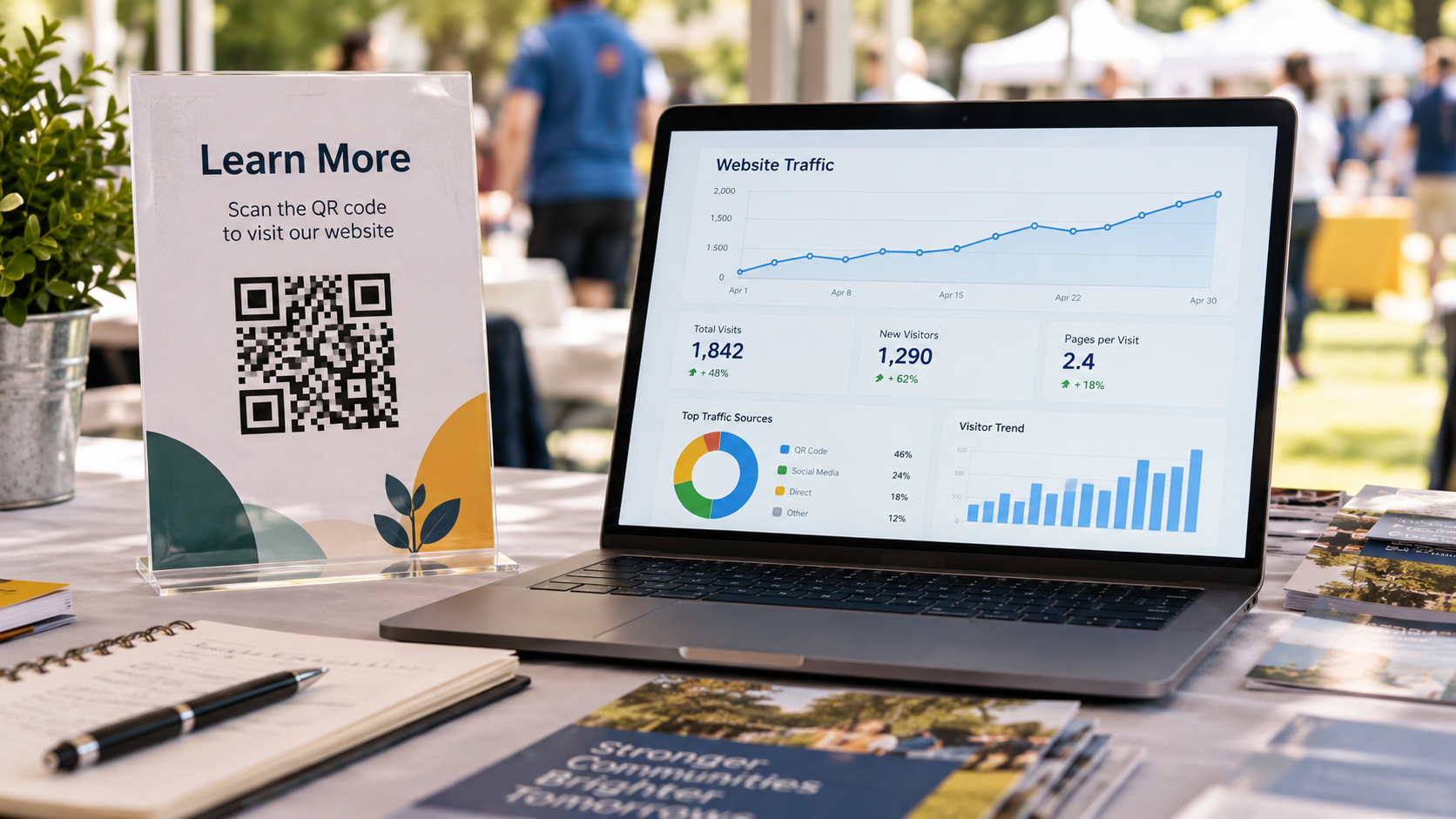
QR code. Point it to your tagged page (good for banners and programs) so each scan shows up in your reports.
“How did you hear about us?” question. Add it to forms and phone calls to catch mentions you can’t trace any other way.
Organizer’s newsletter. Ask for a mention that links to your tagged page, so you can count clicks from their audience.
Using a different code or number for each sponsorship keeps results separate, making sponsorship tracking much simpler when you compare them later.
Check the Results After the Event
Check the numbers a week after the event and again a few months later, because some sponsorship results show up fast while others take time to build.
Within the first week
Website traffic in Google Analytics, compared with a normal week.
Calls, form fills, and promo code uses that mention the event.
Attendance numbers from the organizer, plus any leads you collected at your booth.
Social media engagement during the sponsorship period.
Any sales spike or jump in foot traffic in the days after the event.
A few months later
Repeat customers and referrals that trace back to the event.
Growing customer loyalty among the people you met there.
New relationships with community leaders and other sponsors, since sponsoring often creates networking opportunities that pay off later.
Add these results to your sponsorship log, so the next scorecard has real numbers behind it.
How to Build Local Partnerships on Purpose
Choosing sponsorships yourself lets you choose which causes and audiences you reach, which is hard when you only respond to whatever arrives. Two habits make that practical without adding much work.
Search for Local Sponsorship Opportunities Yourself
Run a short, repeatable search instead of waiting for requests, and expect it to have four parts.
Compile a list of local clubs and charities that serve the customers you want.
Check which of them welcome sponsors and what their packages include.
Use Google search operators, such as “become a sponsor” in quotation marks plus your city name, to find pages with those exact words.
Talk with the event coordinator before you sign, since personal connections often turn a standard package into a better one.
Request a Proposal That Shows What Local Sponsors Get
Beyond audience data, ask the organizer for proof that they deliver for sponsors, and look for these items.
Results from previous sponsorships, such as attendance numbers and sponsor feedback, which show what you can expect.
Measurable metrics, so you can compare one proposal with another.
The exposure opportunities in each package, including where and how your business appears.
Options for a multi-year commitment when a partnership scores well, since it can deepen your ties to the community and build loyalty that a single event rarely does.
Turning Sponsorship Requests Into Part of Your Local Marketing Plan
With a scorecard, tracking, and a budget in place, your sponsorship strategy can sit next to your other marketing strategies and be measured the same way.
What Should You Do Before the Next Request Arrives?
A short setup session now saves you from answering the next request on the spot.
Write down your sponsorship goals, such as reaching new customers or building brand awareness.
Build one reusable tracked page and a promo code you can adapt for each event.
Review your existing sponsorships and note which ones you can show results for.
Ask the next organizer who contacts you for a sponsorship proposal before you answer.
What Are the Key Takeaways Before Your Next Sponsorship?
Keep these three points in mind before you answer your next request.
Goodwill is real, but it doesn’t bring customers on its own.
Audience fit, clear credit, a fair price, and follow-up you control decide whether a sponsorship pays off.
Tracking from the start gives every sponsorship numbers you can use to help your business grow.
Want help sizing up your next sponsorship request? Talk with our team, and we’ll walk through it with you.
The sponsorships worth keeping send customers and thank-yous, and with a scorecard and tracking in place, you’ll know which ones they are.
Sources
American Express. (2025). 2025 Shop Small Impact Study [Survey conducted by Teneo]. As summarized in Mr. Magazine, Key takeaways from the ‘25 Amex Shop Small Impact Study. https://mr-mag.com/key-takeaways-from-the-25-amex-shop-small-impact-study/
Google. (n.d.). URL builders: Collect campaign data with custom URLs. Google Analytics Help. https://support.google.com/analytics/answer/10917952
Sparklight Business. (n.d.). Is that sponsorship worth it? How to evaluate business sponsorship opportunities before you invest. The Wire. https://business.sparklight.com/the-wire/marketing/tactics-strategy/sponsorship-worth-it-how-evaluate-business-sponsorship-opportunities-you-invest
Get the Latest Content in Your Inbox
Want to be the first to know about new content? Sign up to get our weekly blog posts sent to your email!