


Hiring Is a Marketing Problem: How Local Service Businesses Can Attract Skilled Workers
Picture an owner whose schedule is booked for weeks and whose crews could each use one more person. A job posting goes up, a few weeks pass, and the right candidates never show up, even though the budget already covers a good hire.
That situation is a major problem for owners, and it is also a marketing problem, because candidates compare employers the way customers compare businesses. At Locallogy, we help local service businesses stand out online, and the same work applies to recruiting skilled trades for a small business.
This guide covers who to look for and where they search, then moves on to the job posting and the website that backs it up. If you want help with the website side, our web design team can build the pages candidates see.
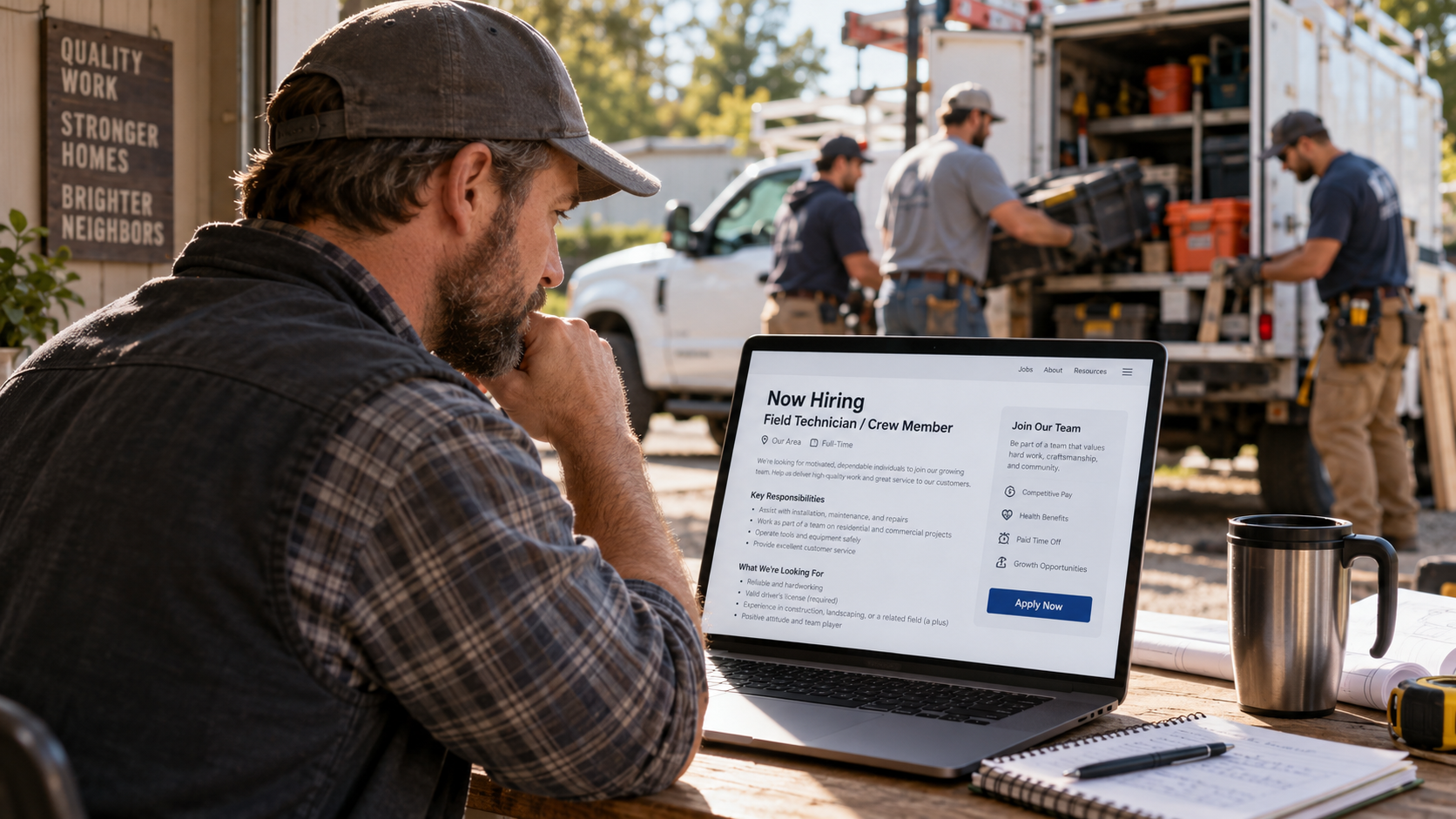
Why Recruiting Skilled Trades for a Small Business Is a Marketing Problem
Hiring works when the right people know your business exists and like what they find. Marketing wins customers the same way, by making a business known and giving people a reason to choose it.
A shortage of skilled workers in the trades makes hiring harder because many businesses compete for the same limited pool of candidates. Two questions cover how big that shortage is and how candidates choose between employers.
How Big Is the Skilled Trades Shortage?
Associated Builders and Contractors estimates that the construction industry needs about 349,000 net new workers in 2026 and 456,000 in 2027 to meet demand (Associated Builders and Contractors, 2026). Its model draws on Census Bureau spending data and Bureau of Labor Statistics employment figures, and it attributes most of the 2026 need to retirements rather than growth.
The estimate covers construction, so it includes owners in remodeling, concrete, fencing, and plumbing. Pest control and lawn care fall outside that estimate, so read it as a guide to the wider trades market.
Why Do Candidates Compare Employers the Way Customers Compare Businesses?
Job seekers check out an employer online before they apply, the same way customers check out a company before they call. In HireClix’s 2025 candidate survey, 57% of job seekers said reviews on sites like Glassdoor and Indeed affect whether they apply (HireClix, 2025).
The survey also found that trust in company career sites is up 42% since 2023, and more than half of Gen Z and Millennial candidates look at an employer’s social media before applying.
Candidates want answers without having to ask for them, so they form an opinion of your business from what they find online. That means winning top talent starts well before the first interview.
How to Find Skilled Tradespeople Where They Already Look
Finding good people starts with knowing who you want and where that person spends time, whether online or in school. Younger people, in particular, rely on job boards, video sites, and classrooms, and these three moves cover places most small businesses overlook.
Define Your Ideal Hire and Choose Specialized Job Boards
Defining your ideal hire starts with splitting the job into two lists. The first covers the technical skills and work experience a person must bring on day one, such as a license or time spent running a crew. The second covers the new skills you can teach on the job. Keeping the first list short widens your pool of quality candidates, since fewer requirements let more people qualify.
Once your two lists are clear, they point to the places that person searches. Specialized job boards for the trades often bring stronger applicants than general sites, since the people browsing them already want trade work.
Younger candidates search in more than one place, though. In Ready to Hire research of 525 Gen Z workers in or considering entry-level skilled trades, manufacturing, and healthcare roles, over 85% checked job boards and 45% used LinkedIn (Cengage Group, 2025). The same research found that 29% used YouTube, so a short video of your crew at work lets candidates see the job before they apply.
Partner With Trade Schools and Show Up at Job Fairs
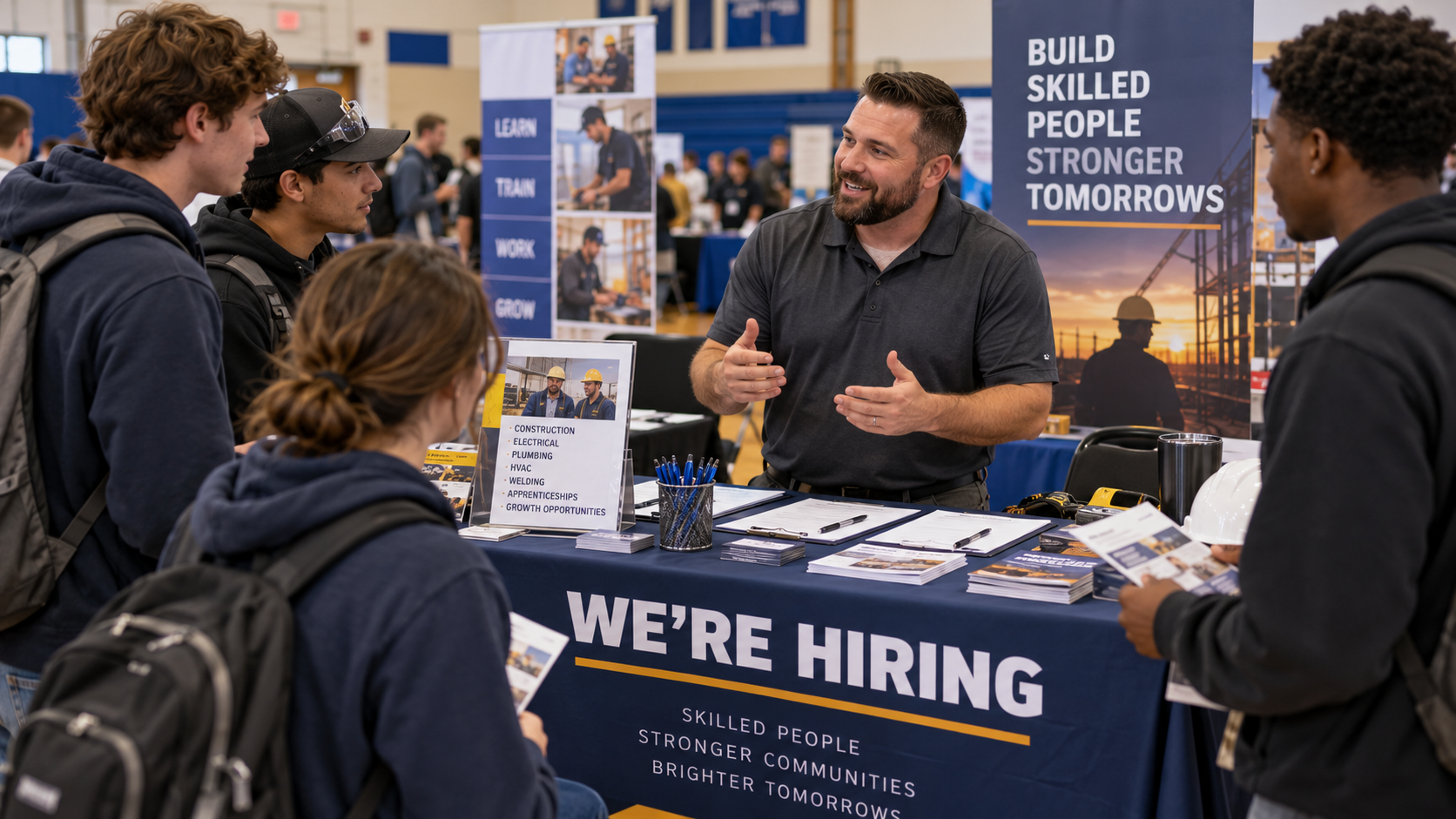
Trade schools teach hands-on skills for specific careers, and many look for local businesses willing to host interns. Partnering with a school lets you meet students before they start applying elsewhere, which expands your talent pool with people already trained in your trade.
Four steps work for most small businesses, from easiest to most involved.
School partnerships. Contact instructors in your trade and offer to speak with a class or show students a job in progress. Instructors often know which students are close to finishing.
Job fairs. Attend job fairs at trade schools, and bring a one-page sheet with your pay range, schedule, and training so students can compare you with other employers.
Internships. Host a short internship, since it lets both sides try each other out and can lead to a full-time job offer.
Paid apprenticeships. Create a paid apprenticeship to build a pipeline of workers trained your way, and spell out what apprentices will learn and how their pay grows.
Reach High School Students and Ask Current Employees for Referrals
The next generation of tradespeople is still in high school, so reaching high school students early gives you a head start before other employers compete for them. A career day talk or a summer job puts your company in front of them. However, it's best to check federal and state youth labor rules first, since some job-site tasks are off-limits for workers under 18.
Your current employees are another source, since skilled workers tend to know other skilled workers. Tell your crew, in plain terms, what kind of person you want to hire so they can think of the right people. A referral bonus gives them a reason to speak up, and paying it after the new hire stays for a set period, such as 90 days, rewards referrals who stay.
How to Write Job Postings That Attract and Keep Skilled Tradespeople
A job posting works like an ad, so it should answer a candidate's questions before they apply. You'll want to focus each part on what the candidate wants to know, beginning with what the job pays.
Show Pay and Benefits Up Front
Competitive salaries get attention, and a posted salary range shows candidates that you value transparency. Benefits belong right beside it, since they weigh heavily when someone compares offers.
Salary or hourly range. Post the real range, so candidates don’t have to ask first.
Health insurance. Offering health insurance helps you retain skilled workers once they start.
Paid time. Paid time off is a key benefit for people working long hours on a job site.
Retirement plan. Even a simple plan helps attract skilled tradespeople.
Performance bonuses. Results-based bonuses reward the work customers notice.
These benefits raise payroll costs, so set the budget before you write the posting.
Describe the Job Site, Schedule, and Next Project
A candidate decides whether a job fits their life before the interview, so the posting should describe a normal week on the job site. Clear job scopes that list the tasks and hours help a new hire picture the work and increase efficiency from the first week. Naming the next project also shows that real work is waiting. Flexible schedules and respect for work-life balance can reduce burnout, and mentioning direct access to management shows how you treat your team.
Promise Training, Tools, and a Positive Work Environment You Can Deliver
Skilled workers want to see that an employer will invest in them, so every promise in your posting needs real backing. In the Ready to Hire research, 98% of Gen Z job seekers open to skilled trades said funded training would make them more likely to pursue those careers (Cengage Group, 2025). Seventy percent said they were extremely likely to pursue paid training programs that lead directly to a job.
Funded training is only one way to show that investment; daily conditions matter just as much. Safe, well-kept tools and a positive work environment tell a new hire that the promise is real. A path to advancement adds to that once it has a clear milestone, such as a certification that comes with a raise.
Regular feedback and recognition then help you retain people after they start. The same follow-through applies before the first day, since quick job offers keep strong candidates from accepting another position.
How to Make Your Website and Reputation Support Your Hiring Pitch
Candidates check your website and reputation before they respond, so both should align with your job posting. Three pieces make that happen.

Add a Careers Page Candidates Can Trust
A careers page gives candidates one place to learn about the job and pay and meet the team. Visitors decide quickly whether a page feels trustworthy, so they judge a careers page the same way they judge a homepage. At Locallogy, we build websites for local businesses, and a careers page can answer the questions your job postings leave open.
Show Your Crew, Your Reviews, and Your Company’s Culture
Candidates want to see the people they would work beside, so photos of your crew on a job site show your company’s culture better than any paragraph can. Customer and former employee reviews matter too, since candidates read them before applying.
Our post on Google Business Profile photos explains how to keep real photos coming regularly, and we can manage your profile if you would rather not.
How Can Locallogy Help You Hire as Well as Sell?
Much of what candidates see about your business lives on your website and Google Business Profile, and we handle both for local businesses every day at Locallogy. We build careers pages and recruiting content for local service businesses, so the site that brings in customers can also bring in crew members. Tell us which roles you need to fill through our consultation page.
Sources
Associated Builders and Contractors. (2026, January 15). Construction industry must attract 349,000 workers in 2026 despite macroeconomic headwinds [News release]. https://www.abc.org/wfshortage
Cengage Group. (2025, March 4). New Ready to Hire research suggests financial barriers preventing Gen Z from closing the skills gap in the skilled trades [Press release]. https://www.cengagegroup.com/news/press-releases/2025/new-ready-to-hire-research-suggests-financial-barriers-preventing-gen-z-from-closing-the-skills-gap-in-the-skilled-trades/
HireClix. (2025, September 9). HireClix research reveals how job seekers navigate a modern labor market [Press release]. Business Wire. https://www.businesswire.com/news/home/20250909919992/en/HireClix-Research-Reveals-How-Job-Seekers-Navigate-a-Modern-Labor-Market
Get the Latest Content in Your Inbox
Want to be the first to know about new content? Sign up to get our weekly blog posts sent to your email!